The 72-hour bag audit: what earns its weight?
A good evacuation bag is a bridge to a safer place. It should match the route, people and conditions you actually face—not a catalog fantasy.
Start with the movement decision
The American Red Cross recommends keeping evacuation supplies in an easy-to-carry kit and distinguishes a three-day evacuation supply from a larger two-week home supply. That distinction matters. Water is heavy: one gallon weighs about 8.3 pounds, so a full three-day drinking and hygiene allocation for one person is not a sensible backpack load for most people.
Write down where the bag is meant to take you: a vehicle, a nearby family member, a public shelter, or a planned walking destination. Add distance, season, likely weather, mobility needs, medicines, pets and the longest realistic delay. Now the kit has a job.
The four-pass audit
| Pass | Question | Action |
|---|---|---|
| Function | Does every item solve a likely problem? | Remove duplicates unless failure would be serious. |
| Access | Can you reach light, medication, water and documents quickly? | Move first-hour items to outer pockets. |
| Carry | Can the intended person carry it safely for the planned route? | Walk the route or a safe substitute. |
| Use | Can you operate every item in low light and rain? | Practice; replace confusing gear. |
Build by function
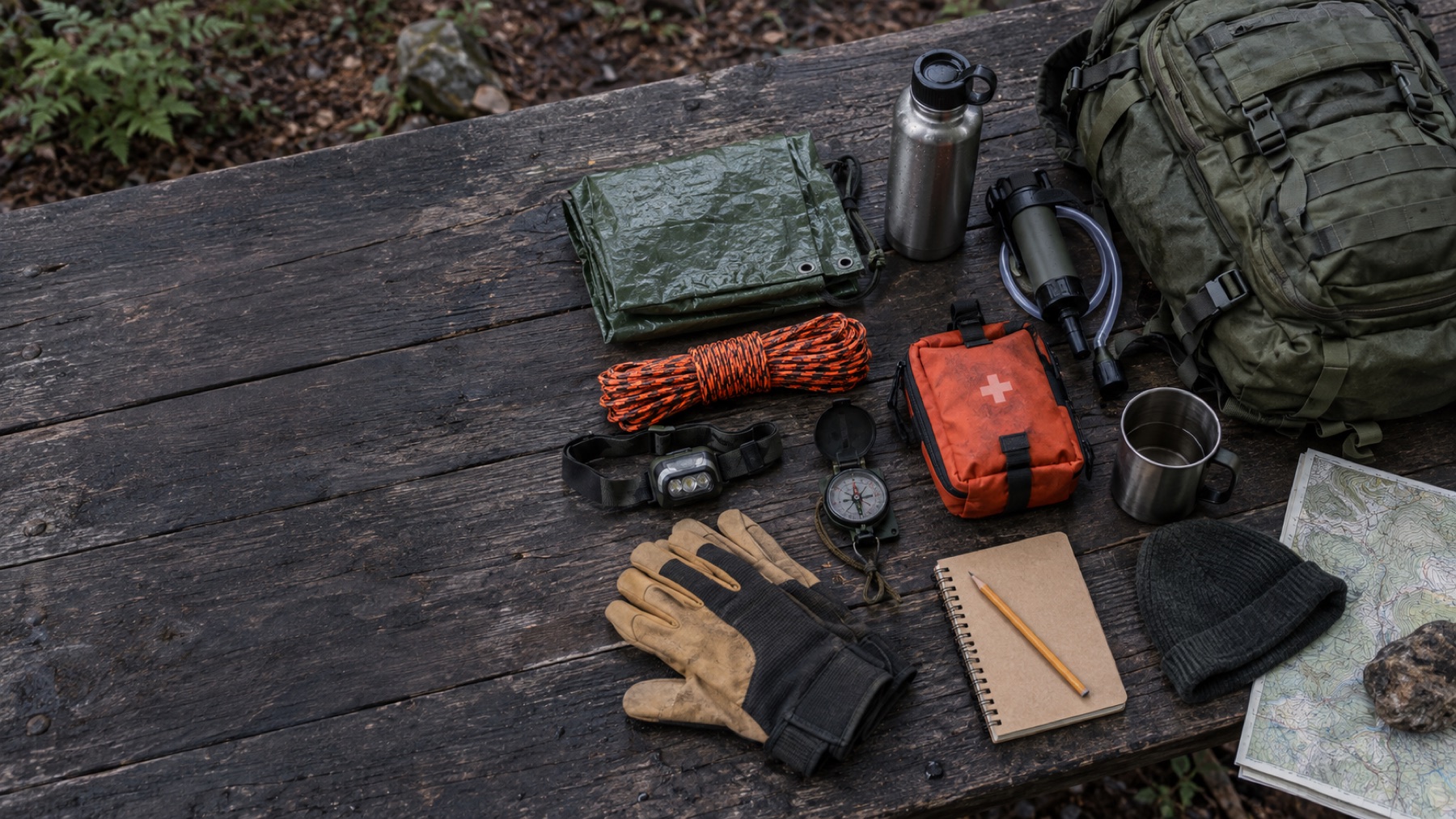
Cover safe water, food you already tolerate, weather protection, light, communications, first aid, medicines, sanitation, identification and a paper contact plan. The Red Cross list includes a flashlight, radio, batteries, first aid supplies, medications and copies of personal documents. Ready.gov also points households toward alternate phone charging and a family communications plan.
Put bulky home resilience supplies in a separate stay-at-home kit. Keep a smaller grab layer near the exit. If you normally evacuate by car, store an additional vehicle module while keeping the wearable bag within the user’s ability.
The failure log
After the walk, record only what happened: which strap hurt, what you could not find, what leaked, what you did not know how to use, and what important need had no answer. Fix those failures before buying an upgrade. Repeat when seasons, routes, health or household members change.